
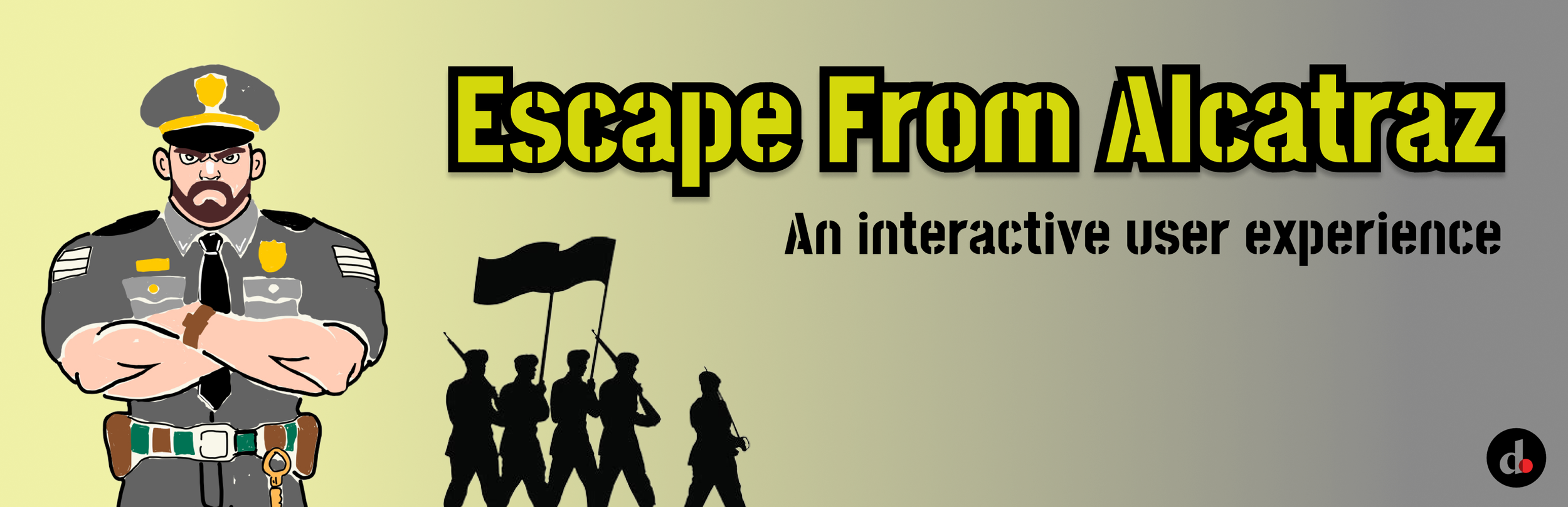
Escape Alcatraz
Escape from Alcatraz is an interactive 4 minute experience designed to teach the user about Alcatraz as well as be a fun, choose your own adventure game. There is only one way to actually escape, making the race against the clock exhilarating. I created this project with 3 other students as a response to the prompt “Teach something in a fun, interactive way”.
My Role
UX/UI Designer
Project
Stanford d.school Group of 3
Timeline
Winter 2025-2 Weeks
Tools Used
Figma, Goodnotes
Final Deliverable
Created by Catya Littlewood, Scotty Edwards, Ava Brosnan and Elise MurphyPart 1
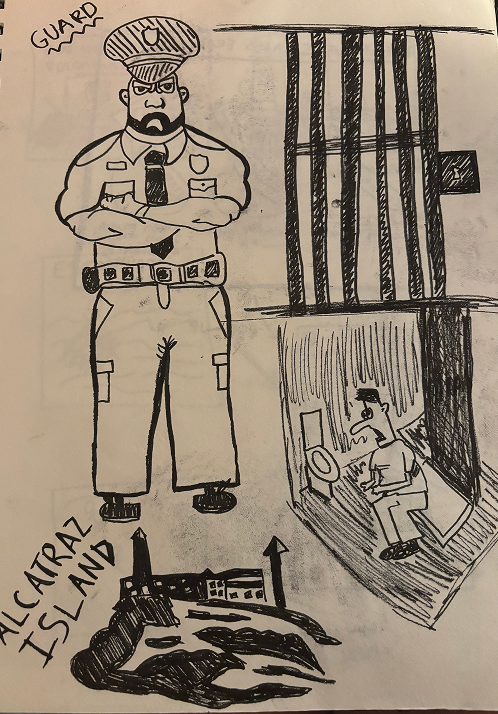
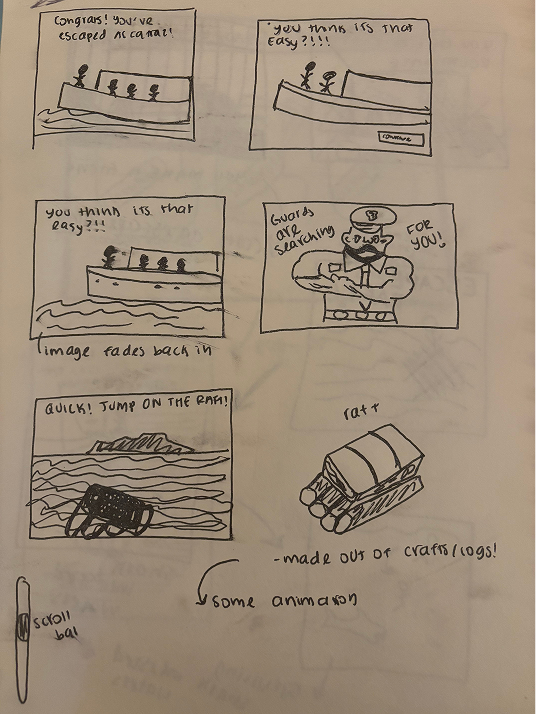
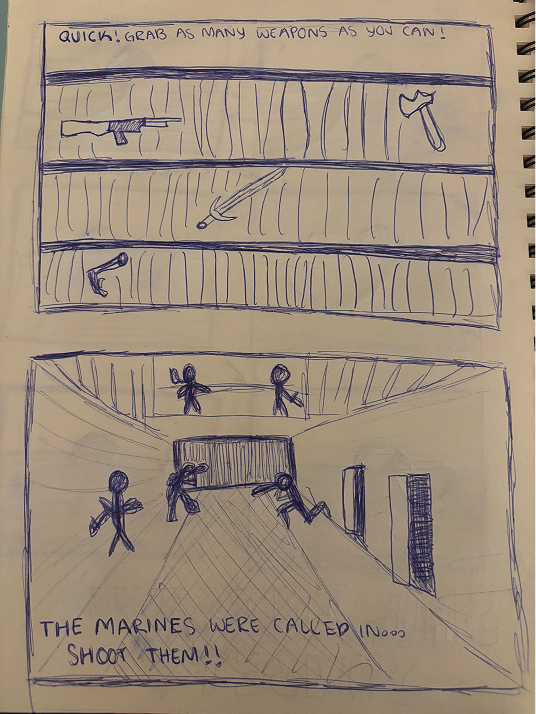
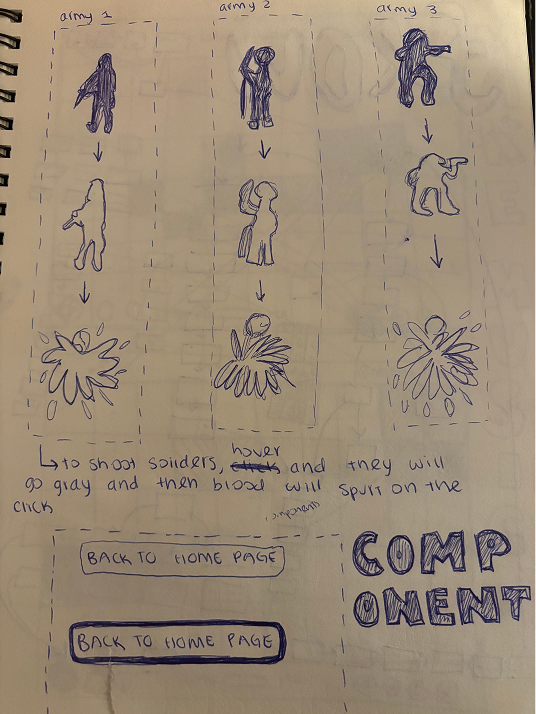
Ideation and Concepts
Part 2
Turning my Ideas Digital
Using my sketches, I translated my hand-drawn concepts into digital graphics in GoodNotes for our interactive experience. One of these sketches—the guard character—became a key component of Escape Alcatraz, helping bring the narrative and environment of the experience to life.


Part 3
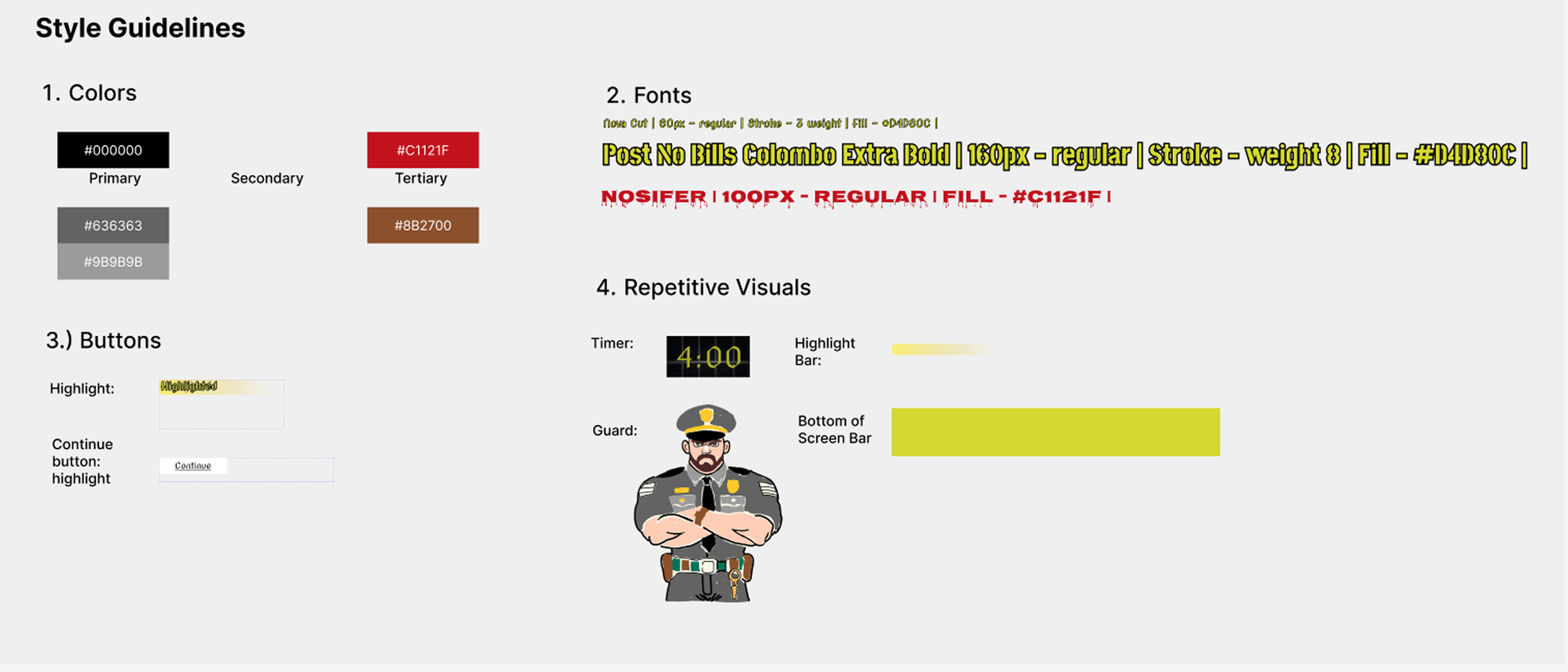
Style Guide and Planning
This style guide was developed to support the narrative and immersive tone of Escape Alcatraz. Inspired by the history and atmosphere of Alcatraz, the visual system uses a restrained color palette with bright accent colors of red and yellow, bold typography, and graphic elements that evoke authority, confinement, and tension. These decisions helped create a cohesive experience across all touchpoints while keeping the interface clear and intuitive for players under time pressure.
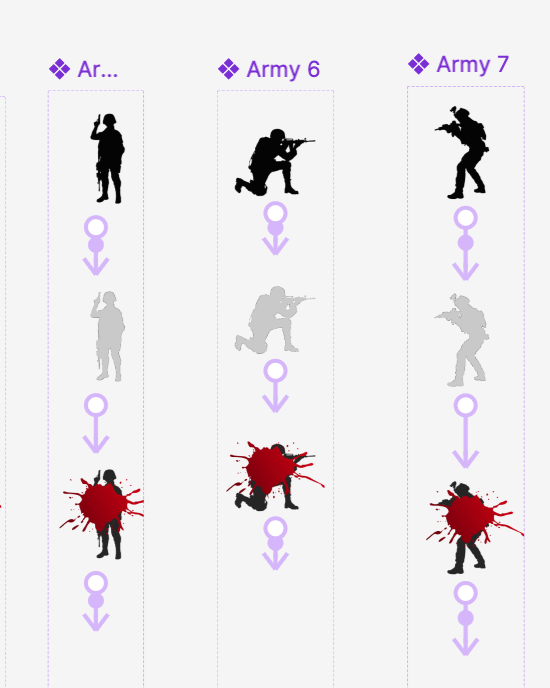
Figma served as our central workspace for translating the style guide into the interactive experience. By organizing components and layouts in a shared system, our team was able to collaborate efficiently, iterate under a tight timeline, and maintain visual consistency across the experience.
Lessons and Learnings
Designing for Story & Immersion
Designing the interactive experience for Escape Alcatraz taught me how to translate a narrative and visual system into a functional, user-centered interface that supports storytelling. Building the experience in Figma pushed me to think beyond static screens and focus on how user flow, visual hierarchy, and clarity under time pressure could actively drive the story forward and keep players engaged in the experience.
I learned the importance of creating a flexible design system—using components, consistent typography, and reusable assets—to support rapid iteration while preserving the tone and atmosphere of the game. Designing under a tight timeline reinforced how essential organized files and clear naming conventions are, not only for efficiency, but for maintaining narrative consistency across the experience as ideas evolved.
Most importantly, this project showed me how interaction design can transform a story into something entertaining and immersive. Small details—such as transitions, iconography, and moments of visual feedback—played a critical role in making the experience feel fun, believable, and engaging, turning the interface itself into an active part of the escape narrative.